Posts

Showing posts with the label Public Health

Partnering with Communities to Bring Primary Health Care to the Peripheries

Image
One cannot simply teach Primary health care to medical students. The students have to learn it by doing. Every year I handle the Primary Health care subject/discussion with the third year medical students. And of course after discussing the theories, they get to immerse themselves with their chosen partner communities to see how they can bring Primary health care to them. So, every where, the third year medical students of the University of Saint La Salle would brainstorm projects that they can collaborate with their partner communities that not only would provide them the experience that would help them understand Primary health care but will actually bring PHC to their partner communities. They are expected to collaborate, work with all kinds of stakeholders, be conscious of different factors that need to be addressed in order to solve or confront a medical problem, and engage the community helping them realize their own empowerment. Instead of a written monthly progress report, th...
Japanese Encephalitis

Image
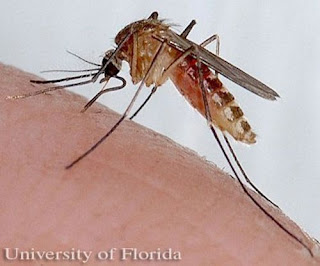
Japanese Encephalitis (JE) is the inflammation of the brain due to a the Japanese encephalitis virus (JEV). This virus is related to Dengue Virus and just like the Dengue virus it is also spread through mosquitoes. According to the World Health Organization  the case-fatality rate among those with encephalitis can be as high as 30%. Permanent neurologic damage or    psychiatric sequelae can occur in 30%–50% of those with encephalitis. As of this moment, there is still no cure for this disease. So, it is better to avoid getting this disease.  Since it is vector-borne, which means, it requires an insect or another animal (vector) to transmit the disease, the best way to avoid or even eliminate the disease is to do vector control or eradication. If communities can be helped to improve sanitation to destroy breeding places of these mosquitoes that can carry the virus or establish protective barriers against mosquitoes such as insecticide-treated mosquito nets in eve...

Everyone Need Vaccines

Image
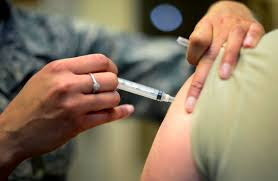
Since its discovery when Edward Jenner made the first inoculation of cowpox in 1796, vaccines have come a long way. It has been regarded as still the cheapest most effective way of health prevention especially against "immunizable" infectious diseases. Many lives have been saved because of vaccines. However, as our understanding of medicine and health continue to evolve, production of vaccines and access to them continue to be confronted with a lot of challenges. There are still some parts of the world where we have failed to eradicate some "immunizable" diseases. And the erroneous claims that vaccines lead to development of autism did not help either. In developing countries, access to vaccines continue to be a challenge and a priority. Under the Expanded Program of Immunization of the World Health Organization, every child before he/she reaches the age of 1 year old must receive a prescribe set of vaccines that can help prevent the acquiring of common infectious d...

Community Medicine: Because Health is Not Health without Social Health

Image
As a professor in medical school teaching Family and Community Medicine, one of my topics is to teach Primary Health Care. I would usually discuss the Alma Ata Declaration Document with the class and discuss historical and current events related to Primary Health Care in the Philippine experience. But I have always felt that the best way to teach Primary Health Care is to let the students experience it for themselves so for the past two years, I have been challenging my third year med students to come up with a community project with a partner "community" of choice where they would come up with a project for the community, particularly one that addresses a health issue. The objective is for them to practice the principles on PHC that they have learned in school. They would write a monthly progress report about what they have done. As a final output they would come up with a video documentary that would describe their project and experience. For this year, I had these amazi...

"Health Is Not An Isolated Issue"

Image
My work provides me with the opportunity to work with frontliners in the Philippine public health system. Being from the frontlines myself (former Doctor to the Barrios), a lot of lessons learned can be shared by those who are literally on the ground, insights which neither the academe can fully teach nor policy makers can fully understand. Lately I visited Looc, Romblon, the current Mayor and MUnicipal Health Officer were my former "students" under the Municipal Leadership and Governance Program of ZFF in collaboration with the University of Makati. They continued their partnership with ZFF under the "alumni program" which is officially known as the "Continuining Leadership in Health and Development Program". participants under the CLHDP discuss issues beyond health and would look at health challenges through different lenses of social determinants such as education and livelihood. Mayor Leila was generous enough with her time when I asked her if I could...

Yes Ma'am, They Are Real!

Image
This morning I got my facebook newsfeed swamped with links to what appears to be a column written by a Ms. Fely Villoria Sicam. The title of her article "Are resident doctors really doctors?" intrigued me so I had to read it for myself, but not before reading some of the comments made already by many who would share the link. Apparently, the article was yet another criticism to a certain sector of fellow health care practitioners. Further reading of the article would reveal that the criticism was directed more to the doctors and nurses working in government hospitals. At first glance I thought it was too stupid an article it has to be ignored. However, I tried to suspend my judgment and gave it another look. This article appeared to be inspired by a personal experience of an author's friend, narrating how this patient allegedly was not taken good care of while at an Emergency Room of a government-owned hospital. Apparently, the experience was not memorable and the interac...

Public Health Campaign Videos

Image
I currently teach Family and Community Medicine for the University of Saint La Salle College of Medicine and I handle the lecture on "History of Public Health". After discussing the milestones in public health both from a global and national perspective, I asked my first year med students if they are aware of existing Public health programs of the government. It then gave me an idea for their first project. Divided into four groups, I asked them to come up with a video that would describe an existing Public Health Program of their choice. The idea is to have a one-shot video supposedly to highlight the process a patient would go through if they were to avail of the services under a specific health program. Here are the four videos they sent. Hope you enjoy them: Video on Family Planning Video on HIV/AIDS Video on Smoking Cessation Video on Essential Intrapartum and Newborn Care Which of the four videos do you like? Like it? Share it. Get the Share on...

A Project for Schools: School-based Health Programs

Image
For school year 2014-2015, I decided to make my family and community medicine 3rd year medical students do a school-based health program for their chosen school. Part of their output is to come up with a video-documentary to summarize what they have done for the year. Here are the four video-documentaries for this year's schools project. Like it? Share it. Get the Share on Facebook widget and many other great free widgets at Widgetbox ! Not seeing a widget? ( More info )Like it.

Connecting Households: The Story of Tinambac

Image
     Among the many challenges faced by any rural community in the Philippines is the lack of proper sanitation. In an archipelagic country blessed with so many natural resources, access to potable drinking water can be very challenging. Of course, its twin problem is access to toilets. Whether it is a coastal community or a village in the uplands, many Filipinos still live in houses that don't have toilets. One can just imagine how they would dispose of their human waste.      One mayor was faced with the same problem. Mayor Owe Velarde, the mayor of a town called Tinambac in Camarines Sur, used to be a village chief (barangay captain) for a long time before he climbed up the political ladder. During his service as a village chief, he was already aware of the problem of his people. When he became Mayor, one of his projects was to provide his community members access to water and toilet. He provided at first individual households with their own toilets an...

Modeling The Way

Image
     I am currently preparing my presentation for tomorrow's program implementation review in the office. Yes, it is that time of the year once again, when your bosses would scrutinize your team's and program's accomplishments for the quarter. I am currently managing a big program called the Community Health Partnership Program and with me are 9 other collaborators who are as passionate as they are diverted in backgrounds.      Our team is comprised of 2 medical doctors, 5 nurses, 2 aspiring medical anthropologists, 1 community development worker with academe background, 3 health social scientists and 1 public health nurse.       To learn more about CHPP and what we do, here's a Prezi presentation which I will also be presenting during the PIR.

Co-creating An Improved Health System: Masbate Provincial Health Summit

Image
     Last April 2, the province of Masbate, led by the Department of Health Center of Health and Development Region V together with the Zuellig Family Foundation, conducted a Provincial Health Summit in Masbate City. It was the first time that the provincial health summit was attended not only by public health leaders and mayors but also other government agencies and  NGOs. The idea of having the summit was due to the observation that among the provinces in the Bicol Region, Masbate is one of the provinces who were not performing well when it comes to improving some of their health indicators, particularly their maternal deaths. In 2012, around 16 mothers died due to pregnancy complications in Masbate, all of whom were poor but were not covered by Philhealth. In the province of Masbate, ZFF has 4 active partner LGUs: Cataingan, Mandaon, Milagros and San Jacinto. All of the mayors of our partner municipalities came to the summit along with other mayors from other ...

To The Philippine Government, From One Of Your Doctors

Image
     According to the Philippine government, I am a tax evader, or at least my kind. I am a medical doctor and it wasn't easy becoming one. One can just imagine the sh*t - literally, at times - that I've been through just to get to where I am now. While my contemporaries are already well established in their careers by the time they were 28 years old, back then I was just about to start, after having just finished 4 years of medical school (not including 1 extra year of internship and 4 years of premed). I decided not to pursue any more specialization because I wanted to focus on public health and community medicine. But for many of my "masochistic" batchmates, they decided another 3 or 4 years of physical and mental torture wouldn't hurt them so they went on to get specialty training as residents. That meant another round of 24-hour duties every 2-3 days in a place which can be as unforgiving as our renowned government hospitals: dilapidated and undermanned facil...

"Because No One Should Die While Giving Life...": Infographic Presentation

Image
     The Zuellig Family Foundation in 2013 had partnerships, through various programs, with more than 200 local government units. Around 76 of them are directly being handled by ZFF while the rest were in partnership with the Department of Health. One of the priority areas of ZFF is to improve maternal health as measured by their health indicators such as Maternal Mortality Ratio. To highlight the findings for 2013, I made an infographic presentation (through PiktoChart.com) to highlight the major details.

Doctor to the Barrio

Image
     It has been 7 years since I decided to become a doctor to the barrio. Since then, the journey has been a roller coaster ride for both me and my family. I have met so many people, learned so many lessons most especially from those I least expected. It was a tough experience for me but given the choice, I would still choose to take the same path. I was reminded by my own journey as a DTTB when I got invited to talk to medical students from the University of the Philippines (College of Medicine) during their Vocations Fair. I think I was the only non-UP alumnus sitting in the panel. When I was in medical school I never had the opportunity to sit down and listen to people from Public Health sharing their insights and stories about their experience.      I hope that the medical students will realize that choosing to go Public Health is the norm and not the alternative. Like it? Share it. Get the Share on Facebook widget and many other gre...

Cinemedicine 2014: Ang Kwento Ng Buhay

Image
           Finally, the entries are all here. For this year, my first year medical students at the University of St. La Salle have produced another batch of amateur films depicting how an individual and a family with illness. This year, a new area in the competition includes Best Actor, Best Actress and Best Director. A certain percentage of the scores will come from online votes. Therefore, after viewing the entries, don't forget to vote for your favorites. Entry No. 1: Mundum Entry No. 2: Tusok Entry No. 3: Nikita Entry No. 4: Hele Entry No. 5: Bosom Entry No. 6: Tatay Vote for your favorite here: Voting is open until January 18, 2014 only. Voting for #Cinemedicine2014 has now officially closed — The Social Doctor (@DocBIENevolent) January 18, 2014 Check out tweets about Cinemedicine2014 Tweets about "#Cinemedicine2014" Like it?...

Cinemedicine 2013: Medicine In The Movies

Image
     In keeping up with my personal tradition, I am now launching the Cinemedicine 2014. Cinemedicine is a collection of amateur films produced by medical students of the University of Saint La Salle College of Medicine under my Family and Community Medicine class. This is actually an offshoot of the tradition I also started with my pre-med students (Cinemanatomy).      The rules and criteria for the Cinemedicine 2014 have already been posted: 1. Each group must portray the impact of a specific illness or medical condition in a story. The group must show the impact of the illness or medical condition not only to the patient but to his/her immediate family. 2. The movie must run for 10 minutes only, excluding opening and closing credits. One point will be deducted for every 30-second excess.  3. The group can use any language for as long as the movie must be subtitled in English. Failure to include subtitles in English would incur a 5-point...

Dirty White Gown: Reflections of a Community Doctor

Image
   It has been 6 years since I became a medical doctor. Before Day One I already decided to be a community physician. There were opportunities to do otherwise and not a day went by when I questioned myself for having chosen the "road less traveled." Somehow, I felt that my heart was in the right place, there in the deep recesses of the community, the most part of it forgotten by mainstream society.    Today, I look back thinking to myself, "Was it all worth it?"   I became a Doctor to the Barrios deployed in a mountainous area far from the comfort and safety of family and all things familiar. I served, for 2 years, a people not my own, a place where I never had prior connection. Yet, each day I spent working with them, I realized how badly they needed the most basic of health care services which perhaps have been deprived from them. Each day I resolved to not only cure the sick but to cure the illness that plagued the society at large, to acknowledge ho...